
How to Calculate Rummy Points: Card Values, Penalties, and Format Guide
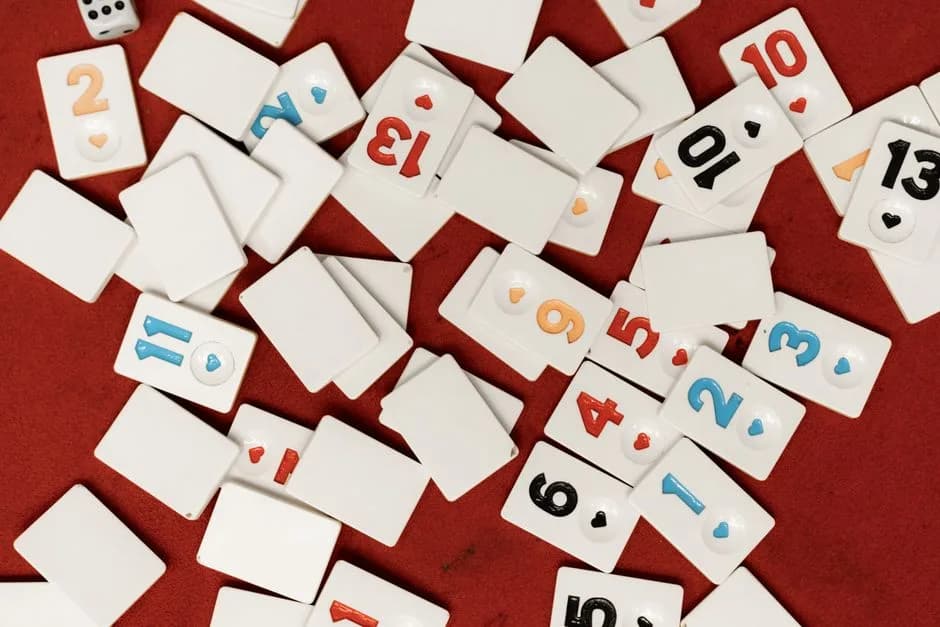
To calculate rummy points, add up the value of all unmatched cards in your hand: Aces and face cards (K, Q, J) are worth 10 points each, number cards are worth their face value, and jokers are worth 0 points.
Knowing how to calculate rummy points correctly is essential in every format of Indian Rummy. Whether you are playing Points, Pool, or Deals Rummy, the same card values apply — but what those points mean for the outcome changes depending on the format you are playing.
Card Point Values: The Foundation
Number cards 2 through 10: worth their face value (2 = 2 pts, 9 = 9 pts)
Ace: 10 points
Jack, Queen, King: 10 points each
Printed joker and wild card joker: 0 points
Only cards that are not part of any valid meld count toward your penalty score. Cards correctly arranged in sets or sequences carry zero penalty weight.
How to Calculate Points in Points Rummy
Points Rummy is played for a pre-agreed rupee value per point. When a player declares and wins, every losing player’s penalty is the sum of their unmatched cards. The winner collects the total of all losing players’ penalties multiplied by the rupee value per point.
Example: In a three-player game at ₹1 per point, Player A wins. Player B has unmatched cards totalling 35 points. Player C has unmatched cards totalling 28 points. Player A wins ₹63 (35 + 28 = 63 × ₹1). See our Points Rummy rules guide for the full format breakdown.
How to Calculate Points in Pool Rummy
In Pool Rummy, each round’s penalty is added to a player’s cumulative score across all rounds. A player is eliminated when their total reaches or exceeds 101 points (101 Pool) or 201 points (201 Pool). The goal is to keep your cumulative total as low as possible. See our Pool Rummy rules guide for elimination thresholds and drop penalty rules.
How to Calculate Points in Deals Rummy
Deals Rummy is played for a fixed number of deals (typically 2 or 3). Each player starts with a fixed number of chips. When a player loses a round, they transfer chips equal to their penalty score to the winner. The player with the most chips at the end of all deals wins. See the Deals Rummy rules guide for the full deal structure.
Penalty for an Invalid Declaration
If you declare with an invalid hand — missing a pure sequence, incomplete melds, or incorrect card groupings — you receive an 80-point penalty regardless of how many unmatched cards you held. This is the maximum penalty across all rummy formats and is applied to your score immediately.
How to Keep Your Point Score Low
Discard high-value unmatched cards early. Aces, Kings, Queens, and Jacks each carry 10 points and hurt your score most if the round ends before you declare.
Keep your jokers. Both types carry 0 points — they cost you nothing even if they remain unmatched when you lose a round.
Form your pure sequence first. Without one you cannot declare, and every extra turn risks accumulating more unmatched points in your hand.
For the meld rules that determine which cards are matched and which are unmatched at declaration, see our pure sequence rummy rules guide.
Rummy scoring methods are also documented on the Indian Rummy Wikipedia page.
Apply Your Rummy Knowledge
Now that you know how points work, put it into practice on UU7Stars with real players.
Play Rummy on UU7StarsFrequently Asked Questions

Written by
Arjun MehtaGame Strategy Writer
Arjun writes UU7's rummy, teen patti, slots, aviator, and live casino strategy content, with a focus on getting the rules exactly right and keeping advice practical rather than hypey.
Sources
Comments
Related Reading
 Game Guides
Points Rummy vs Deals Rummy vs Pool Rummy: Which Format Should You Play?
Points rummy, deals rummy, and pool rummy explained side by side, with scoring rules and a breakdown of which cash rummy format fits your play style.
 Game Guides
Rummy Joker Rules: How Printed and Wild Card Jokers Work
Learn rummy joker rules including how printed jokers and wild card jokers work in Indian rummy, what jokers cannot replace, and how they are scored.
 Game Guides
Points Rummy Rules Explained: How Scoring Works and How to Win
Points rummy rules explained: each card has a face value and the loser pays the winner the total points of their unmelded cards. Full scoring guide India 2026.
 Game Guides
Rummy Tips: Practical Ways to Improve Your Game
Practical rummy tips to sharpen your play: reading discards, sequence priority, joker habits, and when to drop. Real skills, not rule basics.