
What Is a Pure Sequence in Rummy? Rules and Examples 2026
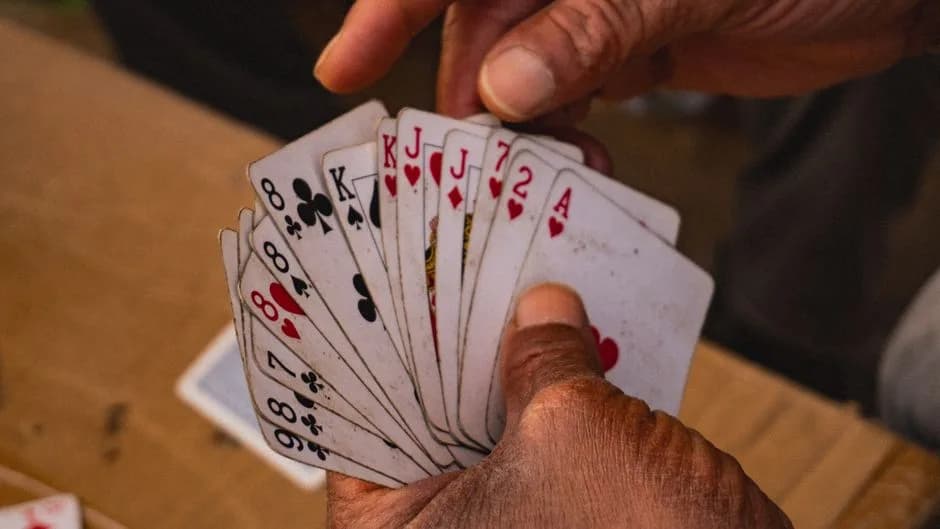
A pure sequence in rummy is a run of 3 or more consecutive cards of the same suit formed without any joker. Every player must have at least one before declaring — without it the hand is invalid and you receive full penalty points.
The pure sequence rummy rules are the most important foundation to understand before playing Indian Rummy. A pure sequence is a run of three or more consecutive cards belonging to the same suit, formed without using a joker or wild card. You must have at least one in your hand before you can declare — no exceptions. Declare without one and your hand is invalid, earning you the full penalty.
What Counts as a Pure Sequence
A pure sequence must meet three conditions. First, the cards must be consecutive in rank. Second, all cards must belong to the same suit — hearts, spades, diamonds, or clubs. Third, no joker or wild card can be used to fill a gap. Any run that uses a joker becomes an impure sequence, which counts toward your total sets but cannot substitute for the mandatory pure sequence.
Valid examples: 3♥ 4♥ 5♥ — 7♣ 8♣ 9♣ 10♣ — J♦ Q♦ K♦ A♦. Invalid: 6♠ Joker 8♠ uses a joker to bridge a gap (impure). 5♥ 6♥ 7♦ mixes suits (entirely invalid).
How Many Cards Can a Pure Sequence Have
The minimum is three cards. There is no upper limit — you can form a pure sequence of four, five, or even six cards. Longer sequences are advantageous because they lock in your mandatory requirement while reducing high-value cards in your hand that add to your penalty if an opponent declares first.
In a 13-card hand, most players aim for one three-card pure sequence and use the remaining ten cards for other sets. A four or five-card pure sequence is worth building if the alternative is holding face cards or Aces, which each carry 10 penalty points.
Pure Sequence vs Impure Sequence
An impure sequence uses one or more jokers to complete the run. Example: 9♣ 10♣ Joker — the joker stands in for J♣. This is a valid meld and counts toward your required sets, but it cannot fulfil the mandatory pure sequence requirement. You still need a separate pure sequence alongside it.
The pure sequence is the foundation your entire hand rests on. Everything else — impure sequences, sets of three or four cards of the same rank — can use jokers freely. Only the pure sequence must stand on its own. Many beginners lose winnable games by declaring with an impure sequence in place of a pure one.
Strategy: Build Your Pure Sequence First
Experienced players sort cards by suit immediately after the deal and identify which cards are one draw away from completing a pure sequence. Discard high-value unconnected cards early — a King or Ace that belongs to no emerging sequence adds 10 points to your penalty if another player declares.
Managing your points total alongside building sequences is crucial. For a complete framework on this, our bankroll management gaming guide covers how to protect yourself from penalty exposure. For reference on international rummy rule variations, Pagat.com's Indian Rummy page is a reliable resource.
Common Mistakes to Avoid
The most common mistake is declaring without verifying the pure sequence. Always scan your sequences before declaring and confirm at least one has no joker. The second mistake is hoarding jokers while leaving the pure sequence incomplete — jokers cannot replace it, so prioritise building the pure sequence before assigning jokers to other sets.
Ready to Play Rummy for Real?
Apply what you've learned about pure sequences on a platform trusted by Indian players.
Play on UU7 StarsFrequently Asked Questions

Written by
Rohan KapoorReviews & Trust Editor
Rohan covers platform reviews, bonus terms, and payments and security topics for UU7 and checks every platform claim against its own published terms before it goes to print.
Sources
Comments
Related Reading
 Game Guides
Points Rummy Rules Explained: How Scoring Works and How to Win
Points rummy rules explained: each card has a face value and the loser pays the winner the total points of their unmelded cards. Full scoring guide India 2026.
 Game Guides
Deals Rummy Rules: How to Play and Win Each Deal
Deals rummy rules how to play: chips are distributed equally before the game, and losers pay chips to the winner of each deal. Full guide with strategy 2026.
 Game Guides
Points Rummy vs Deals Rummy vs Pool Rummy: Which Format Should You Play?
Points rummy, deals rummy, and pool rummy explained side by side, with scoring rules and a breakdown of which cash rummy format fits your play style.
 Game Guides
Rummy Cash Games Explained: How They Work
What a rummy cash game actually is, how stakes and payouts work per hand, and how it differs structurally from a rummy tournament.