
Rummy Tips: Practical Ways to Improve Your Game
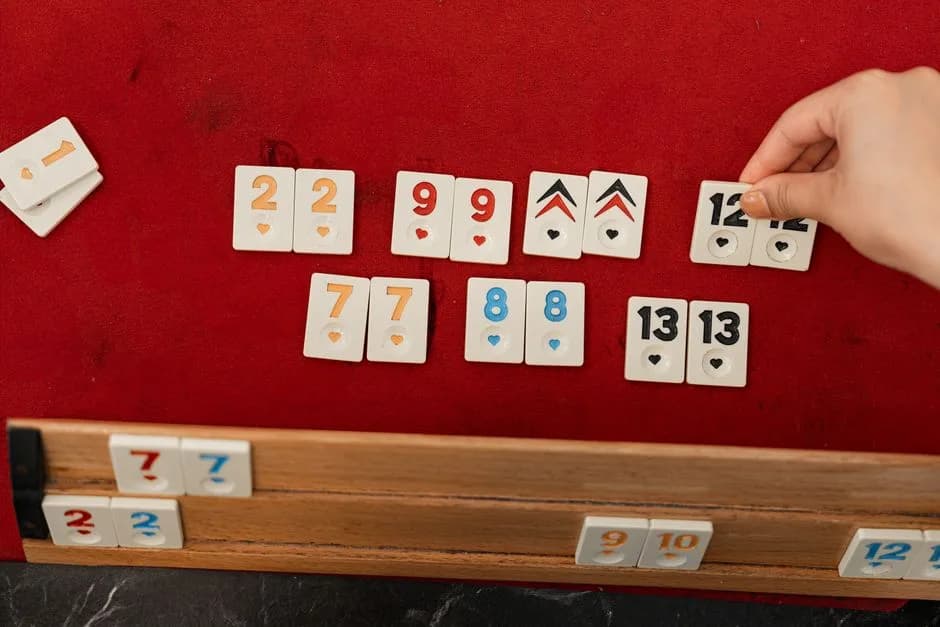
The fastest way to improve is to prioritize your pure sequence first, read the discard pile every turn instead of only your own hand, and drop early when your hand is clearly behind — these three rummy tips cut losing margins more than any single trick.
If you already know how melds, sequences, and sets work, the next question is simple: how do you actually win more hands? This guide skips the rulebook entirely and focuses on the habits, reading skills, and decision points that separate a break-even player from a consistent winner.
If you need the basics first — how a hand is dealt, what counts as a valid sequence, how points are calculated — start with our online rummy guide to rules, formats, and strategy and come back here once you're comfortable with the fundamentals.
Quick Answer
The fastest way to improve is to fix three habits at once: build your pure sequence before anything else, watch the discard pile instead of only your own hand, and drop early when your hand is clearly behind. These three rummy tips alone will cut your average losing margin more than any single "trick" you'll find online.
Why Most Players Plateau
Most players learn the rules once and then stop improving. They know a pure sequence is mandatory, they know jokers are wild, and they know the basic scoring — but they play every hand the same way regardless of what's actually happening on the table. Improvement in rummy comes from reading the table state and adjusting, not from memorizing more rules.
The tips below are drawn from patterns that consistently separate winning sessions from losing ones, whether you're playing points rummy, deals rummy, or pool rummy.
Build Your Pure Sequence First, Every Time
This is the single most repeated piece of advice for a reason: without a pure sequence, you cannot make a valid declaration no matter how many sets or impure sequences you hold. Every other decision in your hand should bend around getting your pure sequence done first.
Practical habit: in the first three to four turns, sort your hand mentally into "close to a pure sequence," "needs a joker," and "unrelated cards." Discard from the unrelated pile before you touch cards that are even loosely connected to a pure sequence. Players who discard connector cards too early — a middle card that could have linked two sequences — are usually the ones stuck holding high-point cards at the end.
Read the Discard Pile Like a Scorecard
New and casual players tend to look only at their own thirteen cards. Improving players treat the discard pile as a second source of information that's just as important.
Here's what the discard pile tells you:
What your opponents don't need. If two 7s of different suits have already been discarded, sequences built around 7s become less likely for whoever discarded them — and slightly more available for you if you're collecting around that rank.
Which suits are drying up. If a suit is being discarded heavily, opponents are probably not building sequences in it, which changes how safe it is to discard from that suit yourself.
How close an opponent might be. A player who suddenly stops discarding high-value cards and starts dropping picture cards or aces is often close to a declaration. That's your signal to tighten up, not to keep taking risks chasing a marginal hand.
Make it a habit to glance at the full discard pile before every draw, not just the top card. It costs a few seconds and consistently gives you better information than watching your own hand alone.
Prioritize Sequences Over Sets When You're Undecided
When a hand could go either way — you have the cards for a set or a sequence depending on what you draw — lean toward the sequence. Sequences are more flexible because a missing card can often be filled by more than one specific card (for example, a gap that can be closed by either of two ranks in some layouts), while a set typically depends on the remaining copies of one exact rank, of which there are only three left in the deck across two decks in most real-money formats.
This isn't a hard rule — sometimes a set is genuinely closer to complete — but when the odds are roughly even, sequences tend to complete faster and more safely.
Joker Usage Habits That Save Points
Jokers are the most misused resource in rummy. Two habits fix most of the waste:
Don't lock a joker into your pure sequence unless you have no choice. Your pure sequence must be genuinely pure — no jokers allowed — so using a joker there doesn't even help; it's a wasted card in the wrong place. Keep jokers reserved for your second sequence or your sets.
Use jokers to rescue your highest-point cards, not your lowest. If you can only complete one more group and you're deciding which cards to attach a joker to, attach it to the group that removes the most points from your hand if you don't declare — usually the group containing your face cards or aces.
A well-timed joker doesn't just help you win; it also minimizes the damage if you have to drop or lose the hand.
Know When to Drop — and Do It Early
This is the tip most players understand in theory and ignore in practice. A drop early in the hand costs a fixed, small penalty. Staying in with a bad hand and losing at showdown, or worse, getting caught with an unfinished hand when someone else declares, costs far more points.
Signs it's time for a first-drop or middle-drop instead of playing on:
You're several turns in with no pure sequence in sight and no joker to fix it.
Your hand is scattered across three or four different sequence attempts with no clear priority.
An opponent's discard pattern suggests they're close to declaring and your hand is nowhere near ready.
Discipline here is a bankroll decision as much as a card-play decision. If you're tracking your sessions properly — which you should be — a habit of early drops on bad hands will show up directly in your long-run win rate. For the bigger picture on managing wins and losses across a full session, see our bankroll management guide.
Common Beginner Mistakes to Cut Out
A few mistakes show up again and again in beginner-to-intermediate play:
Holding onto high cards too long "just in case." A lone king or ace that isn't part of an active sequence attempt is a liability, not an asset. If it's not working toward a group within a few turns, let it go.
Ignoring the discard pile until it's too late. Covered above, but worth repeating — this is the single biggest information gap between casual and improving players.
Overvaluing a near-complete set while ignoring a stalled sequence. Remember, no pure sequence means no valid declaration, regardless of how complete your sets are.
Playing every hand at the same intensity. Not every hand is worth pushing. Some are worth folding early to preserve your position for the next deal.
Picking from the open deck out of habit. Picking a card you don't need just because it's visible telegraphs information to opponents about what you might be avoiding, and it wastes a turn that could have been used probing the closed deck instead.
Practicing Tips Across Different Formats
These rummy tips apply broadly, but how aggressively you apply them can depend on the format you're playing.
In points rummy, single hands end quickly, so early pure-sequence focus and fast drop decisions matter most — there's no time to recover from a slow start.
In deals rummy, you're playing a fixed number of hands against the same opponents, so tracking their discard patterns across deals becomes more valuable than in a one-off points game.
In pool rummy, since players are eliminated at a points threshold, conservative play and early drops on bad hands matter even more in the middle of a pool, when a single bad hand can push you close to elimination.
If you're not sure which format suits your style, our comparison of points rummy vs deals rummy vs pool rummy breaks down the differences in more depth.
Applying These Tips in Cash Games
Once you're comfortable applying these habits in practice tables, the real test is cash play, where discipline around drops and joker usage directly affects your winnings rather than just a scoreboard. Our guide on how rummy cash games work walks through table stakes, entry fees, and payout structures if you haven't played for real money yet.
And if you're still deciding where to play, our roundup of the best rummy apps in India for 2026 covers platform variety, table availability, and app-specific features worth comparing before you commit to one.
Putting It All Together
None of these rummy tips require a strategy overhauling your whole approach to the game. They're small, repeatable adjustments: check the discard pile every turn, prioritize your pure sequence, use jokers on your most expensive groups, and drop early when a hand isn't working. Applied consistently over enough hands, these habits compound into a noticeably better win rate than playing on instinct alone.
Rummy has a long documented history as a matching-card game family, and the Indian variant played across real-money apps today follows the same core logic of forming valid sequences and sets before an opponent does — you can read more about the game's background on Wikipedia's Indian rummy page. The strategic layer described above is what turns that basic structure into a game you can actually get better at over time.
Ready to Put These Rummy Tips Into Practice?
Take your improved discard-reading, sequencing, and drop discipline to the table and play rummy for real money on UU7GAME.
Play on UU7GAMEFrequently Asked Questions

Written by
Arjun MehtaGame Strategy Writer
Arjun writes UU7's rummy, teen patti, slots, aviator, and live casino strategy content, with a focus on getting the rules exactly right and keeping advice practical rather than hypey.
Related Reading
 Game Guides
Points Rummy vs Deals Rummy vs Pool Rummy: Which Format Should You Play?
Points rummy, deals rummy, and pool rummy explained side by side, with scoring rules and a breakdown of which cash rummy format fits your play style.
 Game Guides
Rummy Cash Games Explained: How They Work
What a rummy cash game actually is, how stakes and payouts work per hand, and how it differs structurally from a rummy tournament.
 Game Guides
Cash Tournament Rummy: How It Works and How to Play Smart
How cash tournament rummy works: formats, entry fees, prize pools, common mistakes, and the strategy differences from standalone cash games.
 Game Guides
Teen Patti Rules and Strategy for Beginners
Learn teen patti rules from hand rankings to blind, seen, chaal, and side show betting moves, plus beginner strategy tips for smarter, more disciplined play.