
Points Rummy Rules Explained: How Scoring Works and How to Win
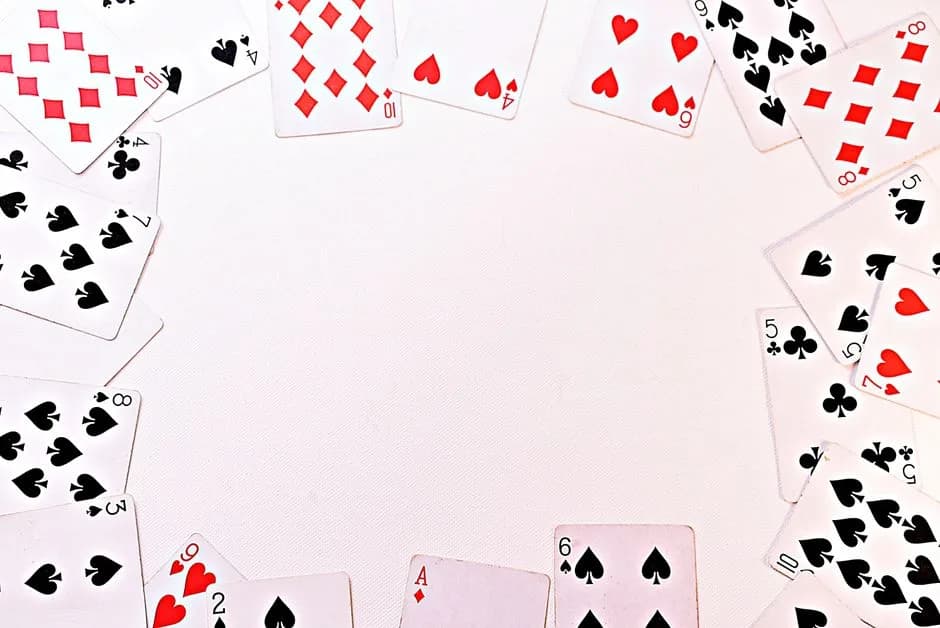
Points Rummy is the fastest format of Indian Rummy. Each game is a single deal — the winner scores zero points and the losers pay them the total value of their unmelded cards multiplied by a pre-agreed rupee value per point. Face cards and Aces carry 10 points each; number cards carry their face value.
The points rummy rules explained here cover everything you need before sitting at a cash table: how cards are scored, what the winner receives, how penalties are capped, and the strategic adjustments that make Points Rummy different from longer formats. Points Rummy is the fastest variant of Indian Rummy — every game is a single deal, decided in minutes, with real money changing hands based on the card values left in the losers’ hands.
How Card Values Work in Points Rummy
Every card in the deck carries a point value. Number cards (2 through 10) are worth their face value — a 7 is worth 7 points, a 2 is worth 2 points. Face cards — Jack, Queen, and King — are each worth 10 points. The Ace is also worth 10 points. Jokers, both printed jokers and wild card jokers chosen at the start of the game, are worth 0 points and never add to a player’s penalty count.
This point system means holding face cards and Aces is extremely risky. If an opponent declares before you form your required sequences and sets, those 10-point cards each add heavily to your penalty. The goal is to get them into valid melds quickly or discard them early.
How the Winner Gets Paid
When a player declares and their hand is valid, the game ends. All other players count the points of their unmelded cards — cards that are not part of any complete sequence or set. The winner earns zero points. Each loser’s penalty is the total of their unmelded card values, multiplied by the rupee-per-point rate agreed before the game.
Example: If the rupee rate is ₹1 per point and you have K♠ Q♥ 7♣ still unmelded when the winner declares, your penalty is 10 + 10 + 7 = 27 points, costing you ₹27. If three players lose with 27, 45, and 18 points respectively, the winner collects ₹90 total.
The 80-Point Penalty Cap
Points Rummy has a maximum penalty cap of 80 points per player per game, regardless of how many unmelded points you actually hold. If you have not yet formed a pure sequence and your unmelded cards total 120 points, you still pay only 80 points. This cap protects players from catastrophic losses on a single bad hand.
The cap also applies to drops. If you drop on the first move (first drop), the penalty is typically 20 points. A middle drop — leaving the game after picking at least one card — costs 40 points. Both are far better outcomes than staying in a bad hand and getting caught with 80 points at declaration.
Strategy Differences from Other Rummy Formats
Because every game is a single deal, Points Rummy rewards aggression. Unlike Pool Rummy where conserving points over multiple games matters, here you race to declare as fast as possible. The mandatory pure sequence requirement still applies — you cannot declare without one — but experienced players often sacrifice waiting for a perfect hand in favour of declaring with a workable 13-card arrangement before opponents can complete theirs.
Discard high-value cards (Kings, Queens, Aces) early if they are not part of an emerging sequence. The points you save by ditching a face card outweigh the benefit of waiting to use it. For the full framework on managing your exposure across sessions, see the Points Rummy strategy guide at RummyCircle.
Wrong Declaration Penalty
If you declare and your hand is invalid — missing a pure sequence, an invalid set, or an incorrect meld — you receive an 80-point penalty and the game continues for other players. Always verify your pure sequence and all melds carefully before pressing declare. A wrong declaration in a high-stakes Points Rummy game is one of the most expensive mistakes a player can make.
Play Points Rummy for Real Money
Fast, single-deal games with real stakes. Try Points Rummy on a trusted Indian platform.
Play on UU7 StarsFrequently Asked Questions

Written by
Arjun MehtaGame Strategy Writer
Arjun writes UU7's rummy, teen patti, slots, aviator, and live casino strategy content, with a focus on getting the rules exactly right and keeping advice practical rather than hypey.
Sources
Comments
Related Reading
 Game Guides
What Is a Pure Sequence in Rummy? Rules and Examples 2026
Pure sequence rummy rules: a run of 3 or more consecutive same-suit cards with no joker used. Mandatory for any valid declaration. Full guide with examples.
 Game Guides
Deals Rummy Rules: How to Play and Win Each Deal
Deals rummy rules how to play: chips are distributed equally before the game, and losers pay chips to the winner of each deal. Full guide with strategy 2026.
 Game Guides
Points Rummy vs Deals Rummy vs Pool Rummy: Which Format Should You Play?
Points rummy, deals rummy, and pool rummy explained side by side, with scoring rules and a breakdown of which cash rummy format fits your play style.
 Game Guides
Rummy Cash Games Explained: How They Work
What a rummy cash game actually is, how stakes and payouts work per hand, and how it differs structurally from a rummy tournament.