
Teen Patti Jackpot: Rules for the Double Joker Variant
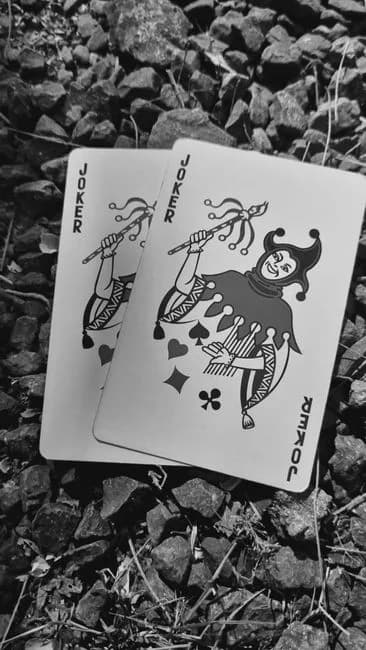
Teen Patti Jackpot commonly designates two joker ranks each round instead of one — typically an open (visible) joker and a closed (hidden) joker — roughly doubling the number of wild cards in play compared to the standard single-joker Teen Patti variant.
Teen Patti Jackpot takes the wild-card idea from the standard Joker variant and doubles it — instead of one joker rank chosen per round, Jackpot typically deals two separate joker cards, using two different selection methods at once. That extra layer of wild cards is where the variant gets its name and its distinct feel at the table.
This article is a deep dive specifically on Jackpot. If you haven't read our classic Teen Patti rules guide yet, start there for the deal and betting mechanics, which Jackpot leaves unchanged. For contrast with the single-joker and fixed-wild-card variants, our Teen Patti Joker variant guide and Teen Patti AK47 guide cover those versions in full. And for a side-by-side comparison of all five named variants, see our Teen Patti variants overview.
What Makes Jackpot Different
Classic Teen Patti has no wild cards. The standard Joker variant adds exactly one wild rank, chosen fresh each round. Teen Patti Jackpot goes further: it commonly designates two joker cards each round instead of one — typically one card drawn face-up (an "open" joker, visible to everyone) and a second card drawn separately and often kept face-down or revealed only after betting begins (a "closed" joker). Both jokers, and every card matching their ranks, are wild for that round.
A caveat worth flagging clearly: Jackpot has more implementation variance across apps than almost any other named variant. Some platforms select two jokers using the open/closed method described above. Others simply select two ranks the same way the standard Joker variant selects one (cutting the deck twice, for instance). A smaller number of platforms use "Jackpot" to refer to a side bonus payout pool for exceptional hands, layered on top of an otherwise standard Joker or classic ruleset, rather than a double-joker mechanic at all. Because of this, always confirm which version of Jackpot a specific platform is running before assuming which mechanic is in play — this article covers the double-joker interpretation, which is the most widely recognized version of the name.
How Two Jokers Change the Math
With two wild ranks in play instead of one, the number of wild cards in the deck roughly doubles compared to the standard Joker variant — from 4 of 52 cards (about 7.7%) up to as many as 8 of 52 (about 15.4%), assuming the two joker ranks are different from each other. That's still far short of AK47's fixed 16 wild cards, but meaningfully more than a single-joker round.
Worked Example: Combining Both Jokers
Suppose the open joker rank is 6 and the closed joker rank is Queen. You're dealt:
6♠ Q♦ 3♣
Both your 6♠ and Q♦ are wild. Only the 3♣ is a fixed card. With two wild cards and one fixed card, you can declare both wilds as 3s, giving you a trail of 3s — the strongest possible hand category, built from a hand that would otherwise be a bare high card.
Worked Example: One Joker, One Genuine Pair
Open joker: 8. Closed joker: 5. Your hand:
K♠ K♦ 8♣
You already hold a pair of Kings before even considering the wild card. The 8♣ is wild, so you can declare it as a third King, upgrading your pair into a trail of Kings. Neither the pair nor the upgrade required the closed joker (5) at all — a reminder that having two active joker ranks doesn't mean every hand uses both.
Worked Example: Neither Joker Helps
Open joker: 10. Closed joker: 2. Your hand:
A♠ J♦ 7♣
Despite two joker ranks being active this round, neither a 10 nor a 2 appears in your hand. Your hand is scored exactly as it would be in classic Teen Patti — a bare Ace-high hand. Two active jokers raise the chances that a hand improves, but they don't guarantee it for every player every round.
Strategy Adjustments for Double Jokers
A few habits matter specifically because Jackpot runs two wild ranks instead of one:
Expect strong hands even more often than in standard Joker. With roughly double the wild-card density of a single-joker round, trails and pure sequences show up more frequently, so hands that would be safely strong in the standard Joker variant need to be read with extra caution here.
Track both joker ranks, not just one. It's easy to fixate on the open (visible) joker and forget to check whether your hand also contains the closed joker's rank, especially since the closed joker may not be revealed until partway through betting depending on the platform.
Re-evaluate immediately once the closed joker is revealed. If a platform reveals the second joker partway through a round, your hand's real strength can change mid-hand — don't lock in a read from before the reveal.
Bluffing is harder to read than in single-joker play. Because two different ranks can each independently boost a hand, a large bet is an even weaker standalone signal than in the standard Joker variant, since more distinct paths exist to a strong hand.
Where "Jackpot" Bonus Payouts Fit In
On some platforms, the Jackpot name also refers to a side bonus: a special payout, sometimes drawn from an accumulating pool across many hands, awarded to a player who hits an exceptionally rare hand — for example, a trail built using both joker ranks simultaneously, or a natural (non-wild) trail of a specific high rank. Where this exists, it typically runs alongside the double-joker mechanic rather than replacing it, functioning similarly to a progressive side bet in other casino games. Whether a specific platform offers this bonus layer, and what qualifies for it, is exactly the kind of detail to check in that platform's own rules before assuming it's available.
A Round-by-Round Walkthrough
Say the boot is ₹10 and four players are dealt in. The open joker is revealed as a 9. Player A stays blind, matching ₹10 without looking. Player B looks and finds 9♦ 9♣ 4♠ — already a pair of 9s before any wild card is even considered, since both 9s are wild here and effectively act as a matched pair regardless. Player B bets ₹20, the standard seen bet.
Player C looks next and holds K♠ 7♦ 2♣ — no 9s at all, so the open joker doesn't help this hand yet. The closed joker is then revealed as a 7. Player C's 7♦ is now wild, and declaring it as a King gives a pair of Kings — a meaningful upgrade that happened only after the second joker came into play. Player C raises to ₹40.
Player D, also seen, holds A♠ Q♦ 5♣ — neither joker rank appears, so the hand is scored exactly as it would be in classic Teen Patti: a bare Ace-high hand. Player D folds.
This sequence shows why tracking both jokers matters: Player C's hand looked unremarkable against the open joker alone, and only became competitive once the closed joker was revealed and correctly applied.
Common Points of Confusion
A few mix-ups come up repeatedly for players moving into Jackpot from the standard Joker variant:
Assuming only the open joker matters. The closed joker is just as wild once it's active — missing it because it wasn't immediately visible is a common and costly oversight.
Confusing Jackpot's double-joker mechanic with a side bonus payout. As covered above, these are two different (if sometimes coexisting) things depending on the platform, and the name "Jackpot" gets used for both.
Expecting the betting structure to change. It doesn't. Boot amount, blind versus seen betting, chaal multipliers, and side show rules all follow the exact same rules as classic Teen Patti and the standard Joker variant.
Assuming the two joker ranks are always different from each other. On most platforms they are, but it's worth confirming rather than assuming, since two identical joker ranks would behave differently from two distinct ones.
Where to Go Next
For the shared mechanics Jackpot builds on, see our classic Teen Patti rules guide. To understand the single-joker baseline this variant doubles, our Teen Patti Joker variant guide covers that version in full, and our Teen Patti AK47 guide covers the fixed-wild-card alternative for further contrast. For a complete side-by-side comparison of all five named variants, our Teen Patti variants overview is the right place to look.
Teen Patti Jackpot rewards players who track two moving pieces at once rather than one — miss either joker rank and you're misjudging your own hand's real strength. The extra layer of wild cards also means the gap between a mediocre-looking hand and a genuinely strong one can close faster than in any single-joker format, which is exactly why re-checking your hand against both active ranks before betting is worth the few extra seconds it takes. For general background on the broader Teen Patti game family this variant belongs to, see the Wikipedia page on Teen Patti.
Try the Double Joker Variant
Track two joker ranks at once and play Teen Patti Jackpot for real stakes on UU7GAME.
Play on UU7GAMEFrequently Asked Questions

Written by
Rohan KapoorReviews & Trust Editor
Rohan covers platform reviews, bonus terms, and payments and security topics for UU7 and checks every platform claim against its own published terms before it goes to print.
Related Reading
 Game Guides
Teen Patti Joker Variant: Rules and How Wild Cards Change the Game
How the Teen Patti Joker variant selects its wild rank each round, how jokers upgrade weak hands into trails, and how the wild card should change your strategy.
 Game Guides
Teen Patti AK47: Rules for the Fixed Wild Card Variant
Teen Patti AK47 makes every Ace, King, 4, and 7 wild for the whole game. See how 16 fixed wild cards change hand frequency and strategy versus classic Joker.
 Game Guides
Teen Patti Muflis: Rules for the Lowest-Hand-Wins Variant
Teen Patti Muflis reverses every hand ranking so the lowest hand wins. See the full reversed ranking order, worked examples, and how to relearn strategy.
 Game Guides
Teen Patti 999: Rules for the Closest-to-Target Variant
Teen Patti 999 replaces hand rankings with a numeric score closest to 9. See the scoring method, worked examples, and how strategy differs.