
Teen Patti Joker Variant: Rules and How Wild Cards Change the Game
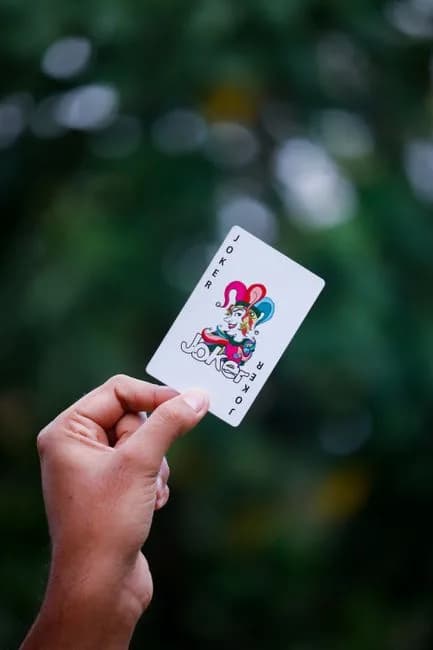
In the Teen Patti Joker variant, one card rank is chosen as wild each round (commonly by cutting the deck or dealing an extra card face-up), and any card of that rank can substitute for whatever card completes a player's best possible hand.
Teen Patti Joker is the single most common variant played on real-money apps, and it's also the one that most changes the math behind every decision at the table. A single wild rank appears every round, and suddenly hands that would be garbage in the classic game can turn into trails.
This article is a deep dive on the Joker variant specifically — how the joker rank is chosen, exactly how it substitutes into a hand, and how it should change your strategy. If you haven't read our piece on classic Teen Patti rules yet, start there — everything below assumes you already know the standard deal, blind/seen betting, and the six-tier hand ranking order, since the Joker variant keeps all of that and only changes one thing: it adds a wild card. If you're looking for a side-by-side comparison of Joker against Muflis, AK47, and the other named variants instead of a full deep dive, our Teen Patti variants overview covers that ground.
What Makes Teen Patti Joker Different
In the standard, no-variant game, the six-tier hand ranking (trail, pure sequence, sequence, color, pair, high card) is fixed and every card is exactly what it says it is. Teen Patti Joker keeps that same ranking ladder untouched but introduces a wild card: one rank, chosen fresh each round, that can stand in for any card a player needs to complete their best possible hand.
That's the entire rule change. Nothing about the deal, the boot, blind versus seen betting, or side show mechanics is different from classic Teen Patti. The only thing that shifts is that some of the cards in your hand aren't fixed values anymore — they're whatever you need them to be.
How the Joker Rank Is Chosen
There are two common methods used across apps and home games to select which rank is wild for the round:
Cutting the deck. After shuffling, the dealer cuts the deck and reveals the card at the cut point. That card's rank becomes the wild rank for the entire round — every card of that rank, in every player's hand and in the remaining deck, is wild.
Dealing an extra card face-up. Instead of cutting, the dealer deals one additional card face-up before or after dealing hands. Whatever rank shows becomes wild for the round.
Either way, the wild rank typically applies across all four suits — if 7 is drawn as the joker rank, all four 7s (hearts, diamonds, clubs, spades) are wild, not just the specific 7 that was drawn. Some tables instead make only the single physical card drawn wild (rather than the whole rank), which is a meaningfully different rule since it limits the wild card to one copy instead of four. This detail varies by platform — some apps make the entire rank wild, others restrict it to the one card, and a few even use two wild ranks in a round. Always check the specific app's rules screen before assuming which version is in play, since it changes how often wild cards actually show up in a hand.
How a Joker Substitutes Into a Hand
A joker card can stand in for any rank and any suit needed to complete the best possible hand a player can make with their three cards. The player chooses what the joker represents — it isn't fixed to one interpretation.
Worked Example: Pair Becomes Trail
Suppose the joker rank for the round is 9, and you're dealt:
K♠ K♦ 9♣
Without the joker rule, this is simply a pair of Kings — a decent but unspectacular hand. With 9 as the wild rank, that 9♣ becomes a joker. You declare it as a third King, and your hand becomes:
K♠ K♦ K♣ (via joker) — a trail of Kings, the strongest hand category in the game.
Worked Example: High Card Becomes a Strong Sequence
Joker rank: 5. Your hand:
A♠ K♦ 5♥
Normally A-K-5 with mixed suits is just a high card hand (Ace-high). With the 5♥ wild, you can declare it as a Queen to complete A-K-Q as a sequence, or even reinterpret it toward a pure sequence if the suits allowed it. In this case A♠ K♦ + joker-as-Queen♦ isn't pure since the Ace isn't a diamond, but it is a valid sequence — A-K-Q — a dramatic jump from a bare high card hand.
Worked Example: Two Jokers in One Hand
Joker rank: 10. Your hand:
10♣ 10♦ 4♠
Both 10s are wild. You can declare them as anything — most players would make them match the third card's rank to form a trail: two wild cards declared as 4s, giving you 4♠ plus two wild 4s, which is a trail of 4s. Two jokers in a single hand is the fastest way to a trail, since you only need the third card to lock it in.
Where People Get Confused
A common misunderstanding is thinking the joker card retains its own printed rank as an alternative — it doesn't. Once a card is designated wild for the round, it has no independent value; it is only ever whatever rank and suit the holder declares it as, chosen to make the best possible hand. A joker is never "wasted" as its own printed rank if declaring it as something else produces a better hand.
Another frequent mistake: assuming every 9 (in the earlier example) automatically becomes a trail component. The joker only helps if you're holding one — it doesn't retroactively change anyone's hand who doesn't have that rank in front of them.
A third mix-up is forgetting that the wild rank resets every round. A rank that was wild last hand has no special status this hand unless it happens to be drawn again.
How the Joker Rule Changes Strategy
The presence of a joker rank doesn't just occasionally help a hand — it shifts the underlying probability of strong hands across the whole table, which should change how you bet.
Trails and Pure Sequences Show Up More Often
With four cards per round (or sometimes a wider range, depending on the platform's exact wild-card rule) capable of substituting into any hand, the odds of someone at the table holding a trail or a strong sequence go up compared to classic Teen Patti. This means a hand that would be comfortably strong in the no-variant game — say, a high pair — needs to be treated more cautiously in Teen Patti Joker, because the field is statistically more likely to be holding something better.
Bluffing Dynamics Shift
In classic Teen Patti, a large bet from a seen player is a meaningful signal, because strong hands are relatively rare. In the Joker variant, that same size of bet is a weaker signal on its own, because more players can plausibly be sitting on a trail or a strong sequence thanks to a joker in hand. This cuts both ways: bluffing with a genuinely weak hand is riskier (since callers are more likely to actually have something), but a legitimately strong hand built around a joker is also harder for opponents to read as "just a bluff," because joker-boosted trails are common enough that big bets get called more often.
Reassess Every Hand After Seeing the Joker Rank
Because the joker rank changes every round, don't evaluate your hand in isolation — check which rank is wild before deciding how strong your three cards actually are. A hand containing the current joker rank is worth re-evaluating for what it could become, not just what it literally shows.
Side Shows Carry More Information
Since a side show in classic Teen Patti already reveals a lot about an opponent's hand, in the Joker variant it also implicitly reveals whether they're holding the current wild rank. Factor that into whether requesting or accepting a side show is worth it in a given hand.
A Note on Table Talk and Reads
Experienced Joker-variant players also pay attention to how quickly opponents act right after the wild rank is revealed. A player who bets immediately and confidently often already knows the joker rank helped them, while hesitation right after the reveal can suggest the wild card didn't line up with their hand at all. This kind of read takes practice to build, since it depends on a specific player's normal pace rather than any fixed tell, but it's worth watching for once the mechanical rules above feel automatic.
For the full mechanics this variant builds on — the deal, blind versus seen betting amounts, and the base hand ranking table — read our classic Teen Patti rules guide. For broader strategy that applies across formats, including bankroll and table selection, see our Teen Patti rules and strategy guide. And if you want to see how Joker stacks up against Muflis, AK47, 999, and Jackpot side by side, our variants overview is the right place to compare all five at once.
Teen Patti Joker rewards players who track the wild rank every single round and adjust their read of the table accordingly — it's a small rule change with an outsized effect on how the game actually plays out.
Teen Patti as a whole has spread widely across South Asia with countless local variants like this one; for background on the game's broader history, see the Wikipedia page on Teen Patti.
Teen Patti Joker vs Classic Teen Patti
| Aspect | Classic Teen Patti | Teen Patti Joker |
|---|---|---|
| Wild cards | None | One rank, chosen fresh each round |
| Hand ranking order | Fixed, six tiers | Same six tiers, unchanged |
| Deal, boot, blind/seen betting | Standard | Identical to classic |
| Strong hand frequency | Baseline | Noticeably higher |
| Bet sizing read | Straightforward | Needs adjustment for wild-card odds |
Try the Joker Variant for Real Stakes
Put your read on wild-card odds to the test and play Teen Patti Joker for real money on UU7GAME.
Play on UU7GAMEFrequently Asked Questions

Written by
Rohan KapoorReviews & Trust Editor
Rohan covers platform reviews, bonus terms, and payments and security topics for UU7 and checks every platform claim against its own published terms before it goes to print.
Related Reading
 Game Guides
Teen Patti AK47: Rules for the Fixed Wild Card Variant
Teen Patti AK47 makes every Ace, King, 4, and 7 wild for the whole game. See how 16 fixed wild cards change hand frequency and strategy versus classic Joker.
 Game Guides
Teen Patti Muflis: Rules for the Lowest-Hand-Wins Variant
Teen Patti Muflis reverses every hand ranking so the lowest hand wins. See the full reversed ranking order, worked examples, and how to relearn strategy.
 Game Guides
Teen Patti Variants Explained: Joker, Muflis, AK-47, 999 and Jackpot
A clear guide to the most popular teen patti variants - Joker, Muflis, AK-47, 999 and Jackpot - and how each one changes strategy and hand strength.
 Game Guides
Teen Patti Rules and Strategy for Beginners
Learn teen patti rules from hand rankings to blind, seen, chaal, and side show betting moves, plus beginner strategy tips for smarter, more disciplined play.