
Online Rummy Legal India: Is Rummy Legal After PROGA 2026?
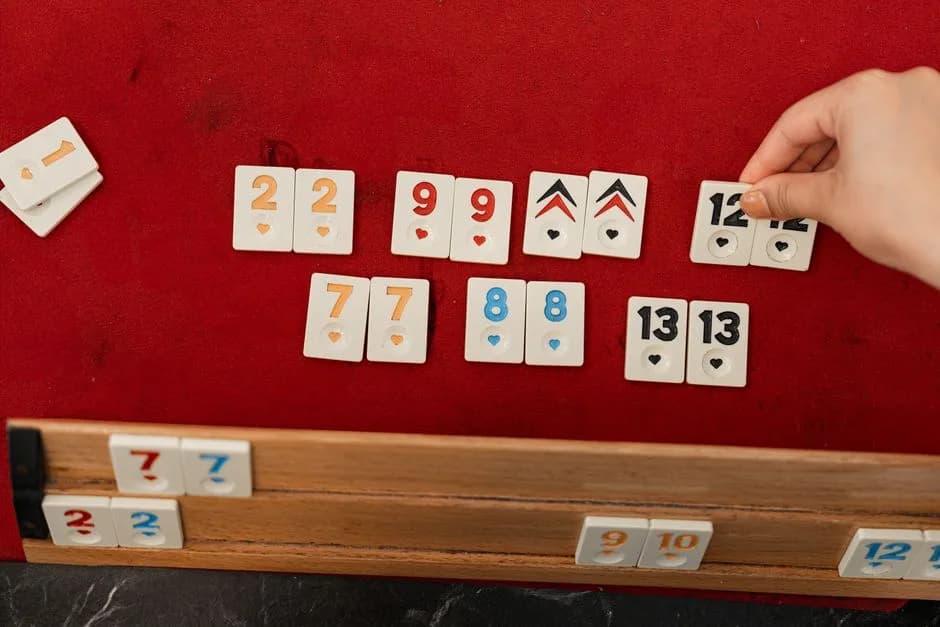
Online rummy legal India status changed fundamentally in May 2026 when PROGA eliminated the skill-game exception that had protected domestic rummy platforms for over a decade. Before PROGA, the Supreme Court's 1968 ruling in State of Andhra Pradesh v. K. Satyanarayana protected rummy as a game of skill outside state gambling laws. PROGA abolished this distinction at the national level, banning all domestic rummy platforms. Offshore rummy sites remain accessible to Indian players.
Online rummy legal India status underwent its most significant change in 58 years when PROGA entered force on May 1, 2026. For more than five decades, domestic rummy platforms operated under the protection of a 1968 Supreme Court ruling that classified rummy as a game of skill, outside state gambling law prohibitions. PROGA abolished this distinction entirely — making domestic rummy operators illegal overnight regardless of the game's skill component. This guide covers the full legal history, what changed under PROGA, and where Indian players can still play rummy for real money in 2026.
The 1968 Supreme Court Ruling That Protected Rummy
In State of Andhra Pradesh v. K. Satyanarayana (1968), the Supreme Court of India examined whether rummy played for stakes at a club constituted gambling under the AP Gaming Act. The Court ruled that rummy is a game of skill because the memorisation of card sequences, prediction of opponents' hands, and strategic decision-making about which cards to hold or discard are skill elements that predominantly determine the outcome. This ruling placed rummy outside the ambit of state gambling prohibitions, creating the legal foundation for domestic rummy platforms.
This ruling was subsequently extended to online rummy by the Madras High Court and other courts, which held that the medium (online vs. physical) did not change the nature of the game. The skill-game protection allowed companies like Games24x7, Head Digital Works, and Junglee Games to build domestic rummy platforms that collectively attracted over 50 million registered users by 2024. The history of rummy's legal journey is documented on Wikipedia's rummy article.
How PROGA Ended Domestic Rummy in 2026
PROGA eliminated the skill vs. chance distinction that had protected rummy for 58 years. The Act's prohibition on real-money online gaming without a Central Gaming Licence applies to all games — the Act explicitly states it makes no distinction based on the predominance of skill in determining the game's outcome. This nullified the 1968 Supreme Court ruling's practical application for online gaming purposes. Domestic rummy operators faced a simple choice: shut down real-money play or face criminal prosecution under PROGA.
All major domestic operators ceased real-money operations in May 2026. Junglee Rummy, RummyCircle, Ace2Three, Classic Rummy, and Deccan Rummy either shut down entirely or switched to free-play-only modes. The combined economic impact included the loss of tens of thousands of jobs at domestic gaming companies and the effective elimination of a ₹8,000+ crore industry. Constitutional challenges to PROGA that specifically target the elimination of the skill-game doctrine are before the Supreme Court but have not yet produced a judgment.
Offshore Rummy — How It Works in 2026
Offshore gaming platforms registered in Curacao and other jurisdictions outside India continue to offer online rummy to Indian players. These platforms are not domestic operators subject to PROGA's licensing requirement. Indian players access them through the internet, identical to how they access any foreign website. Offshore rummy offers three principal formats: Points Rummy (fastest, one round, players pay based on points of unmelded cards), Pool Rummy (101 or 201 pool, last player under the threshold wins), and Deals Rummy (fixed number of deals, chips-based).
UPI Deposits for Offshore Rummy in India
Offshore rummy platforms accept UPI deposits via PhonePe and Google Pay. Minimum deposits are typically ₹100–₹500 equivalent. The UPI deposit process on offshore platforms is straightforward: register on the platform, navigate to cashier/deposit, select UPI, enter the VPA or scan the QR code, and complete payment in your UPI app. Withdrawal to Indian bank accounts via UPI or IMPS typically takes 24–48 hours. For detailed UPI deposit guidance, see our UPI deposit gaming guide.
Tax on Rummy Winnings After PROGA
The Income Tax Act's gaming provisions apply to rummy winnings regardless of PROGA's gaming ban and regardless of whether the platform is domestic or offshore. Section 194BA imposes 30% TDS on net gaming winnings above ₹10,000 per transaction. Offshore platforms do not deduct TDS automatically — players must self-declare gaming income in Schedule OS of their annual ITR and pay the tax directly. Keep records of all deposits and withdrawals to calculate net winnings accurately. For the complete tax guide, see our TDS on online gaming winnings India guide.
Online Rummy in India — Legal Timeline
| Year | Legal Event | Effect on Rummy |
|---|---|---|
| 1968 | Supreme Court ruling: rummy is a game of skill | Rummy protected from state gambling law prohibition |
| 2000s–2020 | Domestic rummy platforms grow under skill-game protection | Junglee Rummy, RummyCircle, Ace2Three operate freely |
| 2017 | Telangana bans all online gaming for stakes | Rummy blocked in Telangana |
| 2020 | Andhra Pradesh bans online gaming for stakes | Rummy blocked in AP |
| 2023 | 28% GST applied to all gaming deposits nationally | Cost of rummy deposits increases significantly |
| August 2025 | PROGA signed — eliminates skill vs. chance distinction | Legal protection for domestic rummy removed |
| May 2026 | PROGA enters force; domestic rummy operators shut down | All domestic rummy platforms end real-money play |
Play Rummy on UU7GAME — Offshore Platform
UU7GAME offers 13-card rummy and card games accessible from India after PROGA. UPI deposits, fast payouts, 24/7 tables.
Play Rummy NowFrequently Asked Questions

Written by
Rohan KapoorReviews & Trust Editor
Rohan covers platform reviews, bonus terms, and payments and security topics for UU7 and checks every platform claim against its own published terms before it goes to print.
Sources
Comments
Related Reading
 Statistics & Reports
PROGA Online Gaming Act India: The Complete 2026 Legal Guide
PROGA online gaming act India explained: signed August 2025, entered force May 2026. Full breakdown of what is banned, who is affected, and what remains legal.
 Statistics & Reports
Is Online Betting Legal in India? Complete 2026 Legal Guide
Is online betting legal in India? PROGA 2026 bans domestic betting operators. Offshore sports betting platforms remain accessible to Indian players.
 Statistics & Reports
Online Gaming Legal in Karnataka: 2026 Status After PROGA Explained
Online gaming legal in Karnataka 2026: PROGA ended domestic operators, but offshore platforms remain accessible. Full state legal status explained for players.
 Statistics & Reports
Online Gaming Legal in Maharashtra: 2026 Status After PROGA Explained
Online gaming legal in Maharashtra 2026: PROGA replaced state-level rules. Offshore platforms remain accessible to Maharashtra and Mumbai players.