
Live Blackjack: Rules and How to Play
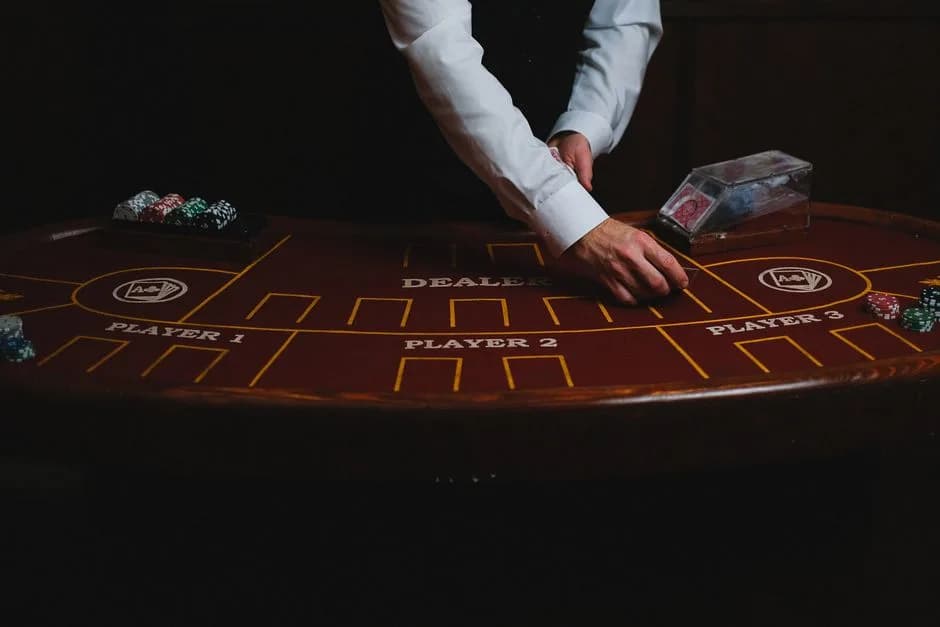
Live blackjack uses the exact same rules as standard blackjack — beat the dealer's hand without going over 21 — dealt by a real dealer from a live studio instead of resolved by a random number generator.
Blackjack's goal never changes: get closer to 21 than the dealer without going over. What live blackjack changes is who's dealing the cards — a real person, on camera, instead of software resolving a random draw.
How Live Blackjack Works
A live blackjack table streams video from a studio where a real dealer deals from a physical shoe. Players place their bets through the platform before the deal, then make each decision — hit, stand, double down, split — through on-screen buttons within a timed window per hand. The dealer plays out the house hand exactly according to standard rules (typically standing on 17), on camera, so every card is visible as it's dealt.
Card values and running totals are usually displayed on-screen alongside the video feed, calculated automatically as the dealer reveals each card, so you don't have to track the count yourself in real time — the interface handles that part while the dealer handles the physical dealing. Shoes are typically multi-deck (six or eight decks is standard) and reshuffled on camera once the cut card is reached, the same way a physical casino floor would run the game.
Where Blackjack Comes From
Blackjack's basic strategy hasn't meaningfully changed since it was first mathematically solved decades ago, and the game's rules are largely standardized worldwide with minor house variations (like whether the dealer hits or stands on a soft 17). For the game's full history and the different rule variations that exist across regions, Wikipedia's blackjack overview covers the game's origins and standard rule variations in detail.
What Actually Changes at a Live Table
Pace: real dealing takes longer per hand than an instant RNG resolution
Seats: live tables cap how many players can join a single round, since a dealer can only handle so many hands
Interaction: you can chat with the dealer and see the shoe directly instead of trusting a result
Table limits: live blackjack minimums tend to run higher than equivalent RNG tables
Understanding Blackjack Payouts
A natural blackjack — an Ace paired with any 10-value card on the first two cards — pays 3:2 on both live and RNG tables, meaningfully better than a standard win's 1:1. Insurance is a side bet offered when the dealer's up-card is an Ace, paying 2:1 if the dealer does have blackjack, though it's generally considered a poor-value bet for players not actively counting cards. A push, where your hand ties the dealer's, simply returns your original bet with no win or loss. Doubling down lets you double your original bet in exchange for exactly one more card, usually best used on a hard total of 10 or 11 where the odds of ending up strong are highest, and splitting divides a pair into two separate hands, each played out and staked independently against the same dealer hand.
Does Card Counting Work on Live Tables?
Since a live table deals from a real physical shoe rather than an RNG, the underlying math behind card counting technically still applies — a shoe running heavy on high cards genuinely does favor the player slightly more than a fresh shoe would. In practice, though, most live platforms reshuffle more frequently than a physical casino floor might, and running the count across a video stream with limited time between hands makes it far less practical than it would be sitting at a physical table. It's a fair question to have, but not something worth building a real strategy around on most platforms.
Common Live Blackjack Variants
Multi-hand tables — play several hands per round against the same dealer to get more hands in per session
Speed Blackjack — shorter decision windows for a faster-paced table
Side-bet variants — optional extra bets on pairs or specific card combinations layered on top of standard blackjack
Choosing a Live Blackjack Table
Beyond stake level, it's worth checking a few table-specific details before you commit to a session: how many decks the shoe uses (fewer decks generally favor the player slightly), whether the dealer stands or hits on a soft 17 (standing is better for the player), and whether the table offers late surrender, which lets you forfeit half your bet on a clearly losing hand instead of playing it out. None of these details change the fact that it's still blackjack, but small rule differences between tables can shift the house edge by a fraction of a percent either way — worth knowing if you plan to play regularly rather than just trying the format once.
Live Blackjack Etiquette
Since a live blackjack table often seats several players at once, most platforms expect the same basic etiquette as a physical casino floor: make your decision within the timed window rather than holding up the round, keep chat courteous, and avoid spamming the dealer with questions mid-hand. On multi-hand tables where you control several positions at once, plan your decisions ahead of time where possible so you're not scrambling against the clock for each hand.
Bankroll Management for Live Blackjack
Because live blackjack minimums usually run higher than RNG tables, size your session bankroll around the specific table you're joining rather than a flat number that worked elsewhere. A common approach is setting a fixed number of maximum bets you're willing to lose before you sit down, and sticking to that limit regardless of how a session is trending. Basic strategy minimizes the house edge over the long run, but individual hands are independent — a losing streak doesn't make the next hand more likely to win, so don't raise your stake to chase back losses.
Tips for Playing Live Blackjack
Standard basic strategy charts still apply — the underlying odds haven't changed
Check the decision timer before joining a Speed table if you're new to the game — a shorter window leaves less room to think
Confirm table limits and rule variations (deck count, soft 17, surrender) before sitting down
Skip Insurance unless you have a specific reason to take it — it's a poor-value side bet for most players in most situations
Set a loss limit before you sit down and treat every hand as independent of the last
For a wider look at how live dealer games work across the board, see our guide to live casino.
Live Blackjack Payouts
| Outcome | Payout |
|---|---|
| Natural blackjack (Ace + 10-value) | 3:2 |
| Standard win | 1:1 |
| Insurance (dealer shows Ace) | 2:1 |
| Push (tie with dealer) | Bet returned |
Ready to Play Live Blackjack?
Join a live dealer blackjack table and play a real hand against a real dealer.
Visit UU7GAMEFrequently Asked Questions

Written by
Arjun MehtaGame Strategy Writer
Arjun writes UU7's rummy, teen patti, slots, aviator, and live casino strategy content, with a focus on getting the rules exactly right and keeping advice practical rather than hypey.
Sources
Comments
Related Reading
 Game Guides
Live Poker: Rules and How to Play
Live poker replaces an RNG with a real dealer and real cards on camera. Learn how live poker variants work and what changes from RNG versions.
 Game Guides
Live Roulette: Rules and How to Play
Live roulette streams a real wheel and a real croupier instead of an RNG. Here's how betting works, what changes, and the common variants to know.
 Game Guides
Live Baccarat: What Changes at a Live Dealer Table
Live baccarat swaps a random number generator for a real dealer, real cards, and a live video feed. Here's exactly what changes and how to play.
 App Tutorials
UU7GAME Live Casino Guide: All Games, Rules, and How to Play
A complete UU7GAME live casino guide covering game types, table limits, dealer streams, and tips for playing live baccarat, roulette, and Teen Patti safely now.