
Mahjong Ways Slot Guide: How the PG Soft Tile Slot Works
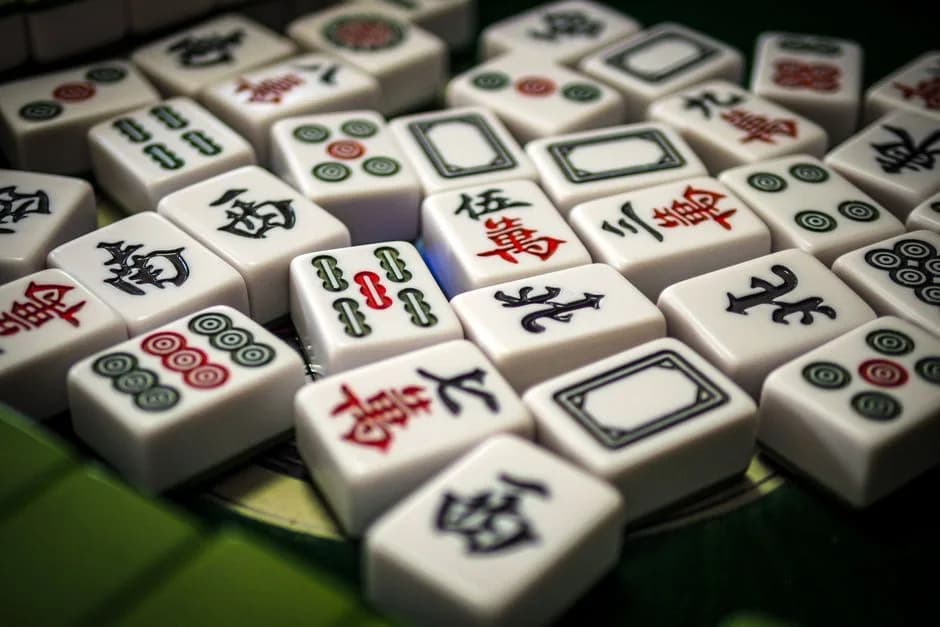
The mahjong ways slot is a PG Soft video slot built on a 5x4 grid with up to 1,024 fixed ways to win, combining tumbling reels with a scatter-triggered free spins round that features an accumulating multiplier.
Mahjong Ways is a real-money slot from developer PG Soft that reimagines the classic tile game as a modern video slot, combining a "ways to win" payout structure with tumbling reels. It has become one of the most recognizable named slot titles on real-money platforms across Asia and India, both for its distinctive mahjong tile symbols and for spawning a sequel title that expanded on the same core formula.
If you're new to the vocabulary used across slot reviews, our online slots guide covering types, jackpots, and RTP is a good starting point. Mahjong Ways is also worth comparing against other named titles covered on this site, including our Super Ace slot guide and our Gates of Olympus guide, since all three are frequently offered together on the same platforms and represent different developers' approaches to bright, fast-paced slot design.
Theme and Background
Mahjong Ways draws its visual identity directly from the tile game of the same name, using stylized mahjong tiles — bamboo, character, and circle suits, along with wind and dragon tiles — as its core symbol set, set against a backdrop that evokes a mahjong parlor. The game doesn't attempt to simulate actual mahjong gameplay; instead, it borrows the imagery and cultural association with the game while running an entirely separate slot mechanic underneath. PG Soft later released a sequel, Mahjong Ways 2, which kept the same visual language while adjusting certain mechanics, so players should be careful not to conflate details between the two titles when reading guides or reviews.
Core Mechanics: Grid and Ways to Win
Mahjong Ways runs on a 5-reel, 4-row grid, which gives it a larger and taller playing field than many traditional three-row video slots. Rather than using fixed paylines, the game uses a "ways to win" system: matching symbols pay out when they land on adjacent reels starting from the leftmost reel, regardless of which row they occupy on each reel. With a 5x4 grid, this produces up to 1,024 ways to win, since each reel can contribute any of its four symbol positions to a winning combination.
It's worth noting that this "ways" mechanic is PG Soft's own implementation and is conceptually similar to, but not identical with, the licensed Megaways system used by other developers, which additionally varies the number of visible symbol rows per reel on every spin. Mahjong Ways keeps a fixed 4-row height on every spin, so its ways count stays constant at 1,024 rather than fluctuating the way true Megaways titles do. For readers who want to understand the broader "ways to win" concept, including how dynamic-reel systems differ from fixed-row systems like this one, our Megaways slots explainer covers that distinction in more depth.
Tumbling Reels and Cascades
When a winning combination lands on Mahjong Ways, the involved symbols clear from the grid, and new symbols drop down to fill the empty spaces, potentially forming additional winning combinations in a chain within the same spin. This tumbling behavior continues until a drop produces no further win. It's a mechanic PG Soft uses across several of its titles, and it plays the same structural role here as in other cascading slots: turning a single spin into a potential sequence of smaller evaluations rather than one static result. Our cascading reels explainer goes into more general depth on how this drop-and-refill logic works across different slot titles.
Scatter Symbol and Free Spins
Mahjong Ways uses a scatter symbol, generally represented by a distinct golden tile, to trigger its free spins bonus round. Landing the required number of scatter symbols anywhere on the grid in a single spin awards a set number of free spins. During the bonus round, multiplier symbols can appear as part of winning tumbles, and their values typically accumulate across the round rather than resetting after each individual spin, which allows the multiplier to climb progressively as the bonus continues. Landing further scatter symbols during the free spins can also add extra spins to the round.
Because the accumulating multiplier is the main driver of Mahjong Ways' largest potential payouts, it functions similarly to multiplier systems used across many other cascading slots, even though the specific accumulation rules are PG Soft's own implementation. For a broader look at how free spins and multiplier accumulation generally work across the slots category, see our free spins and multipliers guide. Mahjong Ways does not use a traditional wild symbol in most versions, leaning instead on its scatter-triggered bonus and tumbling wins; for background on how wild and scatter symbols differ more generally, our wild versus scatter symbols guide is a useful companion resource.
RTP and Volatility
PG Soft publishes a baseline RTP figure for Mahjong Ways, but as with virtually all widely distributed slot titles, the RTP actually active on a specific real-money platform can vary by region, license, and operator-level configuration. Don't treat any single RTP percentage found online as a fixed, universal fact for every platform offering the game — check the information screen on the specific platform you intend to use. Our high RTP slots guide covers how to interpret and compare RTP figures across different titles and platforms if you want a broader framework for that comparison.
Mahjong Ways is generally considered a medium-to-high volatility title. Base-game tumbles can produce a reasonably steady rate of smaller wins thanks to the large number of ways to win on the 5x4 grid, while the accumulating multiplier in the free spins round is where the larger potential payouts concentrate. As with most volatility profiles weighted toward the bonus round, the free spins trigger is not guaranteed within any particular number of spins.
Worked Examples
Example 1 — a base game tumble sequence. Suppose a player spins and lands a matching set of bamboo tiles across three adjacent reels, forming a qualifying "ways" win. Those symbols clear, and new tiles drop into the empty positions. If the new arrangement happens to form another qualifying combination — say, a set of matching circle tiles — a second win registers within the same spin before the tumble sequence ends and the next spin becomes available.
Example 2 — a free spins round with an accumulating multiplier. Suppose a player triggers the free spins bonus with the required scatter tiles and is awarded eight free spins. On the second spin, a multiplier symbol worth 2x appears as part of a winning tumble. On the fifth spin, another multiplier symbol worth 3x appears, and because the multipliers accumulate rather than reset, the running multiplier for the remainder of the bonus becomes 5x. Any further winning tumbles for the rest of the round are multiplied by that accumulated value, producing a payout considerably larger than the same wins would generate without the accumulation mechanic.
Practical Tips for New Players
Understand the difference between "ways to win" and fixed paylines before playing, since a 1,024-ways grid evaluates wins very differently from a traditional payline slot.
Don't confuse Mahjong Ways with true Megaways titles. The ways count here is fixed at 1,024, not dynamic from spin to spin, even though the visual impression is similar.
Pay attention to whether your platform's version accumulates multipliers across the entire free spins round or resets them each spin, since this materially affects how large a bonus round payout can get.
Treat listed RTP and volatility figures as reference points, and check the specific numbers disclosed by the platform you're actually using.
Set a session budget in advance given the medium-to-high volatility profile, since the free spins trigger and multiplier accumulation are both random and not guaranteed within any fixed number of spins.
Common Points of Confusion
A frequent point of confusion is assuming Mahjong Ways uses the same dynamic reel-height system as licensed Megaways titles; it doesn't, since its grid stays a fixed 5x4 shape with a constant 1,024 ways on every spin. Another common misunderstanding involves the tumbling mechanic — some players assume tumbles are a bonus feature rather than a core part of every winning spin, base game included. Finally, players sometimes expect the accumulating free spins multiplier to behave identically across every PG Soft title with a similar bonus round, when accumulation rules and caps can differ meaningfully between Mahjong Ways, its sequel, and other titles in PG Soft's catalog.
Mahjong Ways Versus Mahjong Ways 2
Because PG Soft released a direct sequel using the same visual theme, it's easy to find guides, forum posts, and videos online that blend details from both games without making clear which title they're describing. Mahjong Ways 2 kept the tumbling mechanic and the tile-based symbol set but adjusted aspects of the bonus round and made changes to how multipliers and jackpot elements are presented, and depending on the platform, the two titles may even be listed under similar names in a game lobby. If a specific detail you've read about Mahjong Ways doesn't match what you see in the paytable of the game you've actually opened, it's worth double-checking whether you're looking at the original title or its sequel before assuming the source you read was wrong.
Why the Fixed Grid Still Feels Dynamic
Even though Mahjong Ways keeps a constant 5x4 grid and a fixed 1,024 ways to win on every spin, the combination of that many ways with the tumbling mechanic creates an experience that feels dynamic in practice, even without the reel-height variation of true Megaways titles. Each tumble effectively gives the grid a fresh chance to form new "ways" combinations using freshly dropped symbols, so a single spin can visually resemble a rapid sequence of different boards rather than one static outcome. This is part of why cascading mechanics and large ways-to-win counts are so often paired together across PG Soft's catalog and other developers' titles alike: the two mechanics compound each other's sense of frequent activity, even when the underlying mathematical structure — a fixed grid shape evaluated repeatedly — is simpler than it might first appear.
This mahjong ways slot guide has covered the ways-to-win grid, tumbling mechanic, and accumulating multiplier bonus you're likely to encounter, but exact figures and configuration details can still vary between operators, so always confirm the specifics on your own platform before playing.
Where to Go Next
For more on the concepts referenced throughout this guide, see our online slots guide covering types, jackpots, and RTP, our Super Ace slot guide, our Gates of Olympus guide, our Megaways slots explainer, our cascading reels explainer, our free spins and multipliers guide, our wild versus scatter symbols guide, and our high RTP slots guide.
Mahjong itself, the tile game that inspired this slot's visual theme, has a documented history stretching back to nineteenth-century China; readers curious about that background can consult Wikipedia's overview of Mahjong for more detail on the tile game the slot borrows its imagery from. As with any real-money slot, Mahjong Ways' outcomes are randomized, no strategy can guarantee a win, and it should only be played with money you can afford to lose.
Ready to Try Mahjong Ways?
Explore Mahjong Ways and other named slot titles on UU7GAME's real-money platform.
Play on UU7GAMEFrequently Asked Questions

Written by
Arjun MehtaGame Strategy Writer
Arjun writes UU7's rummy, teen patti, slots, aviator, and live casino strategy content, with a focus on getting the rules exactly right and keeping advice practical rather than hypey.
Related Reading
 Game Guides
Fortune Tiger Slot Guide: How the PG Soft Tiger Slot Works
A full fortune tiger slot guide covering theme, wild multipliers, bonus rounds, RTP and volatility, plus tips for new real-money players.
 Game Guides
Sweet Bonanza Slot Guide: How the Pragmatic Play Fruit Slot Works
A complete sweet bonanza slot guide covering cluster pays, tumbling reels, free spins multipliers, RTP and volatility for new players.
 Game Guides
Money Coming Slot Guide: How the JILI Toad Slot Works
A detailed money coming slot guide covering the golden toad theme, expanding wild, hold-and-win coin bonus, RTP and volatility.
 Game Guides
Boxing King Slot Guide: How the JILI Boxing Slot Works
A full boxing king slot guide covering the expanding wild, round-based multiplier bonus, RTP and volatility for real-money players.