
Baccarat Rules and Strategy for Beginners
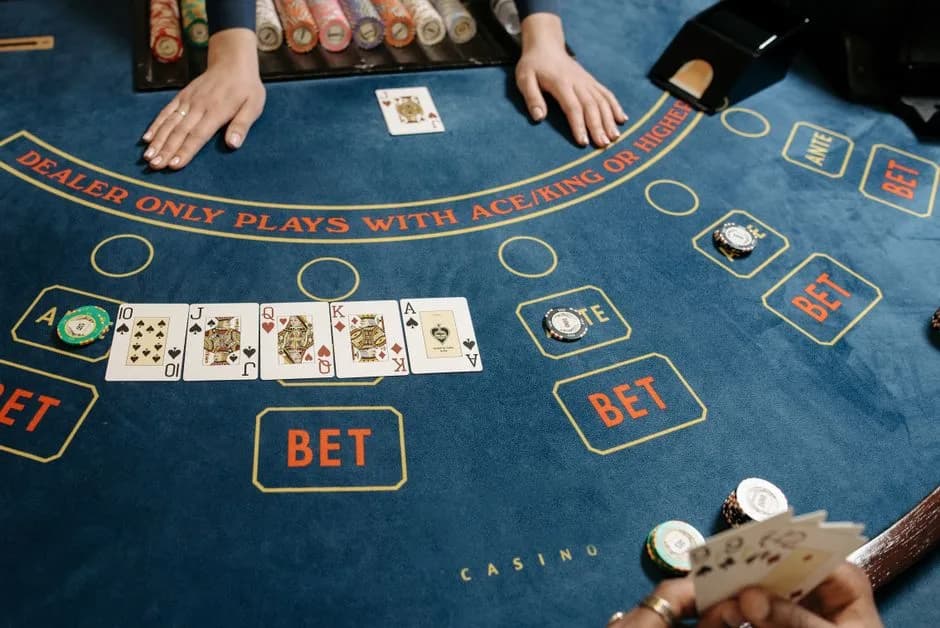
Baccarat is a comparing card game where Player and Banker hands are dealt automatically by fixed rules, and the goal is simply to bet on whichever hand ends up closer to a total of 9.
What Is Baccarat?
Baccarat is a comparing card game played between two hands, called "Player" and "Banker." Despite the names, these are not necessarily you and the house — they are simply the two hands the cards are dealt to, and any player at the table can bet on either one. The version you will almost always encounter in an online casino or on a real-money gaming app in India is called Punto Banco, which is Portuguese/Spanish for "Player Banker." In Punto Banco, neither the Player hand nor the Banker hand makes any actual decisions. Once bets are placed, the cards are dealt and drawn according to a completely fixed set of rules, and the software (or, in a live-dealer setup, the dealer following a strict procedure) resolves the hand automatically. This is one of the first things beginners should understand about baccarat rules: there is no bluffing, no hitting or standing choice, and no skill involved in how the cards play out. Your only decision is what to bet on before the cards are dealt.
This makes baccarat quite different from games like teen patti or poker, where reading opponents and making betting decisions mid-hand matters. It is closer in spirit to roulette in terms of player involvement, but with a card-game feel and a lower house edge on its main bets. If you are also curious about another simple comparing-card game with a similarly quick pace, it is worth reading about Dragon Tiger rules and strategy, which shares a lot of the same beginner-friendly logic as baccarat.
Card Values and Hand Totals
Before you can follow a single hand, you need to know how cards are valued in baccarat. The system is simple once you see it written out:
Ace counts as 1
Cards 2 through 9 count at their face value
10, Jack, Queen, and King all count as 0
Each hand (Player and Banker) is dealt two cards initially, and you add up the values of the cards in that hand. The twist is that only the last digit of the total counts. So if a hand has a 7 and an 8, the total is 15, but in baccarat that hand is scored as 5, not 15. Similarly, a 9 and a 6 would add up to 15, which again becomes 5. A hand of 10 and 9 adds up to 9 (since the 10 counts as 0). This "drop the tens digit" rule is central to understanding baccarat rules, because it is what keeps every possible hand total between 0 and 9.
The Goal: Getting Close to 9
The entire object of the game is straightforward: whichever hand — Player or Banker — ends up with a total closer to 9 wins that round. A hand totaling 9 is the best possible result and is called a "natural 9." A hand totaling 8 is the next best, called a "natural 8." If either hand is dealt a natural 8 or 9 from its first two cards, that round typically ends right there without any further cards being drawn, unless both hands are tied on the same natural total, in which case it is a push for the Player/Banker bets and a win for Tie bets if applicable.
Because the outcome is entirely about who gets closer to 9, and because the drawing of extra cards follows fixed automatic rules, baccarat plays very fast. A single round, from bet placement to result, often takes well under a minute online, and even faster in fully automated digital versions.
Betting Options: Player, Banker, or Tie
Before any cards are dealt, everyone at the table (or every player on the app, since baccarat online is typically played individually against the software rather than against other real players) places one of three basic bets:
Player — betting that the Player hand will end up closer to 9
Banker — betting that the Banker hand will end up closer to 9
Tie — betting that both hands will finish with the exact same total
You are not required to bet on the hand named "Banker" being controlled by the house — remember, "Banker" is just the name of one of the two hands being dealt, and you can bet on it the same as you would the Player hand. Many tables also offer side bets (like betting on a specific natural, or on a Player/Banker pair), but Player, Banker, and Tie are the three bets every beginner needs to know first.
The Third-Card Rule, Explained Simply
This is the part of baccarat that trips up most beginners, so it helps to zoom out rather than memorize a chart. If neither the Player nor the Banker hand has a natural (an 8 or 9 from the first two cards), the game may deal one additional third card to one or both hands, depending on their current totals. In general terms: the Player hand's total is checked first to see whether it draws a third card, and then, depending on what happens with the Player hand's total and third card, the Banker hand may or may not draw a third card of its own.
The important thing to understand as a beginner is that these third-card drawing rules are completely automatic in essentially every online or app-based baccarat game. You are not asked whether the Player or Banker hand should take another card, and you do not need to memorize the exact numeric thresholds that trigger a third card to enjoy or play the game competently. The software applies the same fixed procedure every single time, so the outcome of any given hand is determined purely by the cards drawn, not by any decision you or anyone else makes at the table. If you want to see the precise third-card tableau and any table-specific variations, that level of detail is best checked against the specific platform you are playing on — for example, UU7GAME's dedicated baccarat guide walks through the exact table rules and interface for that app. For general play, just knowing that "Player draws first under certain totals, and Banker's draw can depend on what card the Player drew" is enough to follow along and understand why a hand played out the way it did.
Payout Basics
Baccarat's payout structure reflects the fact that the Banker hand wins slightly more often than the Player hand over the long run, purely as a mathematical consequence of the third-card drawing rules. Because of this small edge, most tables charge a commission on winning Banker bets, which is deducted from your payout when the Banker hand wins. Player bets, by contrast, typically pay even money with no commission, since the Player hand does not carry the same statistical edge. Tie bets pay out at a much higher rate than either Player or Banker, since a genuine tie between the two hands is comparatively rare — but that higher payout comes with a much higher house edge, making Tie one of the least favorable regular bets on the table.
Exact commission percentages and Tie payout multipliers vary from platform to platform and are sometimes adjusted for promotional tables, so rather than relying on a fixed number, always check the paytable displayed on your specific app or casino table before you start betting. This is a case where reading the platform's own rules screen matters more than any general guide, since baccarat rules around commission can differ slightly between operators.
Why Baccarat Is So Popular
Baccarat has built a reputation as one of the more glamorous casino card games, partly thanks to its association with high-stakes tables and its frequent appearances in film and popular culture. But its real-world popularity, especially among newer online players, comes down to much more practical reasons:
Speed — rounds resolve quickly since there is no complex decision-making
Simplicity — the entire game comes down to picking Player, Banker, or Tie
No in-round decisions — once you bet, the outcome plays out automatically
Low learning curve — you can understand the basic goal (get closer to 9) in a couple of minutes
Approachable for newcomers — there is no need to learn hand rankings, bluffing, or complex betting rounds like in poker or teen patti
This combination of speed and simplicity is a big part of why baccarat sits comfortably alongside other easy-to-learn comparing-card games. If you enjoy this style of play, Dragon Tiger is worth exploring too, since it strips things down even further while keeping a similar "bet and watch" structure.
Basic Baccarat Strategy for Beginners
Since there are no in-hand decisions to make in baccarat, "strategy" here does not mean the same thing it does in a game like poker or blackjack. There is no hand to play, no cards to draw or decline — the strategy that actually matters in baccarat is almost entirely about bet selection and how you manage your money over a session, rather than anything you do once a hand is in progress.
A few starting points worth keeping in mind:
Understand the long-run edge between Banker and Player. Because the Banker hand statistically wins slightly more often before commission, many experienced players default to Banker bets over Player bets, accepting the commission as the cost of a marginally better long-run position. This is not a guarantee for any individual hand, only a general tendency across many rounds.
Be cautious with Tie bets. The much higher payout on Tie is tempting, but it reflects how infrequently a genuine tie occurs, and it carries a noticeably higher house edge than either Player or Banker. Treating Tie as an occasional, small, deliberate bet rather than a core strategy is generally the more sensible approach.
Decide your bet sizing and session limits before you start. Since you cannot influence how a hand plays out once bets are placed, the only real control you have is over how much you stake per round and when you choose to stop. Setting a loss limit and a target win amount ahead of time, and sticking to them, matters more in a game like baccarat than in almost any other card game.
Avoid chasing losses with bigger bets. Because outcomes are independent from round to round, a losing streak does not make a win "due," and increasing bet size to chase back losses is one of the more common ways players get into trouble.
Treat it as entertainment, not income. Baccarat can be enjoyable and fast-paced, but every bet carries a house edge, and no betting pattern changes the underlying odds of any individual hand.
If bankroll discipline is a new concept for you, it is worth spending time with a dedicated bankroll management guide before you sit down at a real-money baccarat table, since good money management tends to matter more to your overall experience than any bet-selection tweak.
Baccarat is one of the easiest real-money card games to pick up precisely because it asks so little of you in the moment: learn the card values, understand that hand totals wrap around at 9, pick Player, Banker, or Tie, and let the software handle the rest. The baccarat rules covering the third-card draw can look intimidating written out in full, but as a beginner you genuinely do not need to memorize them — every reputable platform applies them automatically and consistently. Spend your energy instead on the things you actually control: which bet type you lean toward, how much you stake, and when you walk away. Once those basics feel comfortable, you will find baccarat is one of the fastest, lowest-friction card games available on most real-money gaming apps.
Frequently Asked Questions

Written by
Rohan KapoorReviews & Trust Editor
Rohan covers platform reviews, bonus terms, and payments and security topics for UU7 and checks every platform claim against its own published terms before it goes to print.
Sources
Comments
Related Reading
 Game Guides
Teen Patti Rules and Strategy for Beginners
Learn teen patti rules from hand rankings to blind, seen, chaal, and side show betting moves, plus beginner strategy tips for smarter, more disciplined play.
 Game Guides
Dragon Tiger Rules and Strategy for Beginners
Learn the dragon tiger rules, card ranking, and payout basics, plus simple beginner strategy for bankroll management and pacing your sessions.
 Game Guides
Andar Bahar Rules and Strategy for Beginners
New to the game? Learn the complete andar bahar rules, the joker card, payout basics, and a beginner-friendly andar bahar strategy in one clear guide.
 App Tutorials
UU7GAME Baccarat Guide
Learn how to play Baccarat on UU7GAME with this complete guide covering rules, the three main bets, drawing rules, table variants, and strategy tips.